

The Best Skincare Routine for Your 40s
By your 40s, a targeted skincare routine becomes one of the most important investments you can make in your skin. Collagen production slows, cell turnover becomes less efficient, and fine lines that once faded quickly may start to settle. These changes are expected - but they are also very manageable with the right approach.
This stage is not about reversing time. It is about understanding your skin more precisely and supporting it in the way it now needs. A well-structured routine, built around clinically proven ingredients and consistent use, can significantly improve skin quality, texture, and overall radiance. With the right combination of daily care and targeted treatments, many of the visible signs of ageing can be softened, and further changes slowed.
From key ingredients to essential steps, here is what your skin needs in your 40s to look and feel its best.
Skincare in Your 40s: What to Know
Collagen Declines Steadily and Consistently
From around the age of 25, the skin produces approximately one percent less collagen per year ¹. By your 40s, that cumulative loss is visible. Skin loses its bounce, the eye contour becomes less taut, and lines that once softened overnight become more defined. For women, the trajectory accelerates - studies show that women lose up to 30% of skin collagen in the first five years following menopause ³. Either way, the 40s are a critical decade for intervention.
Cell Turnover Slows Significantly
In your 20s, skin renews itself roughly every 28 days. By your 40s, that cycle has extended to 45 to 60 days ⁴. Dead cells sit on the surface for longer, contributing to dullness, uneven texture, and a complexion that can look flat rather than lit from within. Supporting turnover through the right ingredients and treatments restores that natural luminosity.
The Eye Area Shows Ageing First
The skin around the eyes is among the thinnest on the face, and it shows the effects of ageing, fatigue, and environmental stress earlier and more visibly than anywhere else. As Dr Zamani tells patients in clinic: "The eye area is one of the first places to show signs of ageing - not just under the eyes, but on the upper eyelid as well. Most creams don't address both."
Hydration Becomes Non-Negotiable
As oestrogen levels begin to fluctuate in perimenopause, the skin's ability to retain moisture changes ⁵. Research confirms that skin hydration and barrier function are significantly affected by hormonal shifts, with transepidermal water loss increasing as oestrogen declines ⁶. Building hydration into every step of the routine - not just the moisturiser - is the most effective approach.
How to Change Your Routine
In your 40s, skincare becomes less about doing more and more about doing the right things consistently. The fundamentals do not change, but the way you approach them should become more considered. Dr Zamani's three-step philosophy offers a clear framework: Reveal, Enhance, Protect.
Rather than complicating your routine with unnecessary layers, focus on optimising each step so that every product works with purpose and precision.
Step 1 - Reveal
Cleansing is no longer just about removing makeup or impurities. It is about preparing the skin properly. Opt for gentle, barrier-supporting cleansers that do not strip the skin. Incorporating mild chemical exfoliation a few times per week can help support slower cell turnover, improving texture and radiance without irritation.
Step 2 - Enhance
This is where targeted treatment becomes essential. Introduce intelligent active ingredients that support collagen production and skin renewal - retinol, peptides, and antioxidants. Serums should be selected based on your primary concerns, whether that is fine lines, pigmentation, or loss of firmness. Clinical-grade devices can also be introduced here, as light technology works synergistically with topical actives to improve overall skin function ⁷.
Step 3 - Protect
Protection becomes increasingly important as the skin's natural resilience declines. Daily SPF is non-negotiable. A well-formulated moisturiser supports the skin barrier. The eye area should be treated separately with formulations designed specifically for this delicate skin, rather than extending your face cream into the orbital area.
Key Ingredients to Incorporate
Retinol - The Gold Standard for Cell Turnover
Retinol remains one of the most extensively researched ingredients in skincare ⁸. A derivative of Vitamin A, it accelerates cell renewal, stimulates fibroblasts to produce collagen, and visibly reduces the depth of fine lines with consistent use. A review published in the Journal of Cosmetic Dermatology confirmed retinol's efficacy in improving skin texture, tone and firmness with minimal side effects when properly formulated ⁹. Encapsulated delivery systems release the active gradually into the skin, improving tolerability without compromising efficacy.
Bakuchiol - The Evidence-Backed Alternative
A plant-derived alternative to retinol, Bakuchiol has been shown in peer-reviewed research to deliver comparable improvements in fine lines, skin elasticity and hyperpigmentation - with significantly fewer side effects ¹⁰. A double-blind randomised trial published in the British Journal of Dermatology found Bakuchiol 0.5% applied twice daily was equivalent to retinol 0.5% in reducing photoageing, with markedly less irritation ¹⁰. It is particularly well-suited to reactive or sensitive skin, or as a companion ingredient to retinol.
Peptides
Peptides are short chains of amino acids that signal the skin to produce more collagen and elastin ¹¹. Research shows that topical peptides improve skin firmness and elasticity with consistent use, particularly around the eye contour where structural support is most vulnerable ¹².
Multi-Weight Hyaluronic Acid
A molecule capable of holding up to a thousand times its weight in water, Hyaluronic Acid draws moisture into the skin and holds it there ¹³. Multi-molecular-weight formulations - delivering hydration to multiple layers of the skin simultaneously - are clinically more effective than single-weight alternatives ¹⁴.
Bio-Placenta Peptides
A biomimetic, lab-grown ingredient that replicates the regenerative growth factors found in human placenta - including Epidermal Growth Factor (EGF) and Acidic Fibroblast Growth Factor - without any animal-derived components. EGF accelerates skin renewal and stimulates fibroblast activity, increasing collagen and hyaluronic acid production ¹⁵. Acidic FGF promotes collagen synthesis and dermal repair, contributing to visibly firmer and more resilient skin over time ¹⁵.
LED Light Therapy
Red LED light at wavelengths of 630 to 700nm has been clinically demonstrated to stimulate fibroblast activity, increase collagen synthesis and reduce the appearance of fine lines ¹⁶. A systematic review confirmed that consistent LED photobiomodulation improves skin texture and firmness with a well-established safety profile ¹⁶. Used three to five times per week, LED light therapy measurably amplifies the performance of topical actives by increasing cellular receptivity ⁷.
The MZ SKIN Routine for Your 40s
Whether you are building your routine from scratch or refining what you already have, the structure below gives you a clear framework - from a minimal daily approach to a fully optimised morning and evening ritual.
|
Morning |
Evening |
|
|
Simple |
Cleanse → Eye Cream → Moisturise → SPF |
Cleanse → Retinol Serum → Eye Cream → Moisturise |
|
Advanced |
Cleanse → Serum → Eye Cream → Moisturise → SPF |
Cleanse → LED (3–5x per week) → Retinol Serum → Eye Cream → Moisturise |
The MZ SKIN Products for Your 40s
The following products form a complete, clinically considered routine for skin in its fourth decade - each chosen for a specific purpose within the Reveal, Enhance, Protect framework.
Treat - Advanced Retinol Complex Serum
The cornerstone of any anti-ageing routine in the 40s, the MZ SKIN Advanced Retinol Complex Serum combines encapsulated Vitamin A with Bakuchiol and retinoid complex (3%) - a next-generation retinoid that delivers comparable results to traditional retinol on fine lines and skin texture, with significantly improved tolerability.
Unlike traditional retinol formulas,, this serum prioritises barrier health alongside active delivery, releasing the active gradually into the skin, reducing the risk of irritation while maintaining the clinical efficacy that makes Vitamin A the most evidence-backed anti-ageing ingredient available without prescription ⁸. Soybean oil and Vitamin E support barrier integrity throughout.
When introducing new actives - particularly retinol - proceed gradually. Begin with two evenings per week and increase frequency over time as your skin builds tolerance.
How to use: Apply to cleansed, dry skin on alternate evenings to begin. Build to nightly use over four to six weeks. Do not apply directly to the eye area.
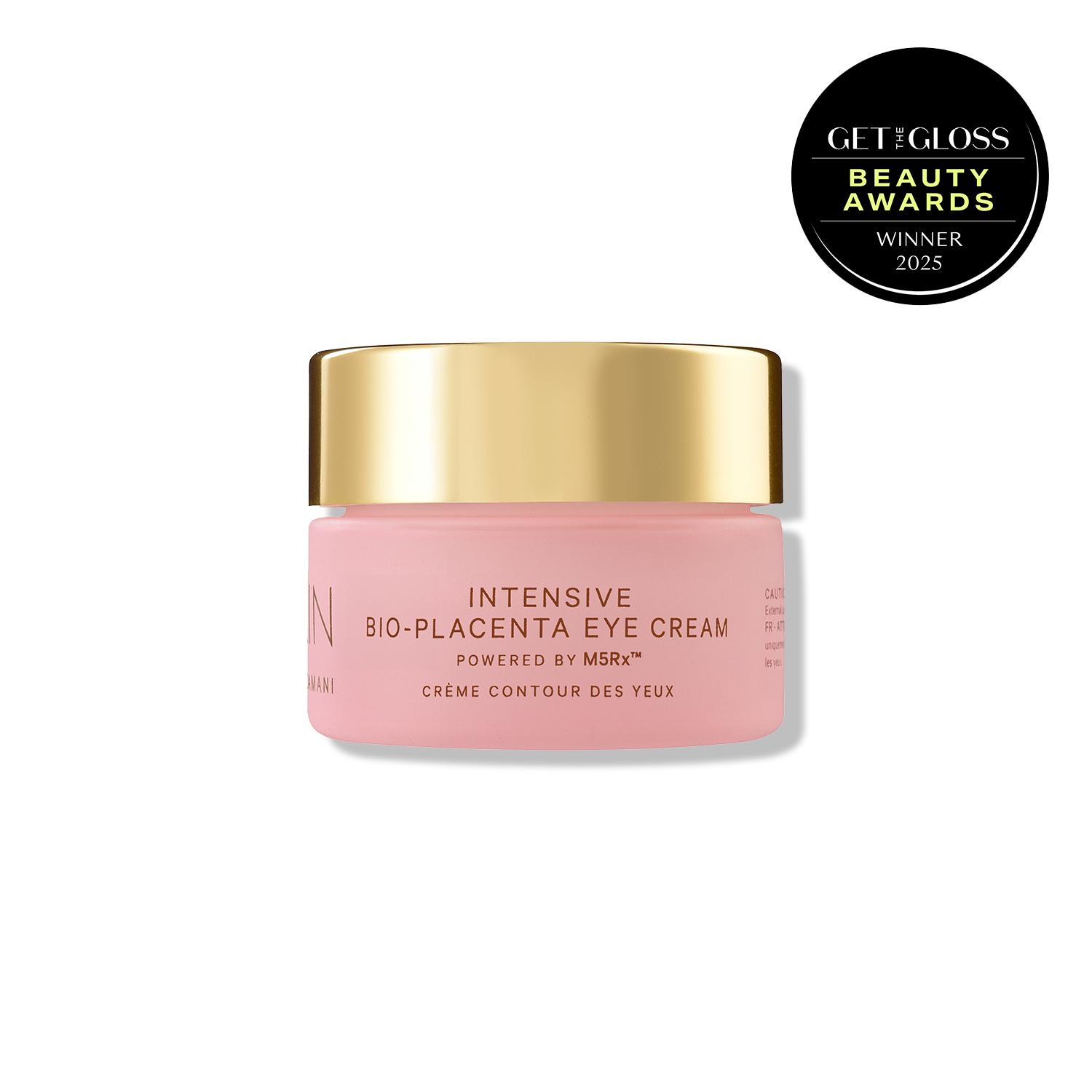
Treat the Eye Area - Soothe & Smooth Hyaluronic Brightening Eye Complex
The eye contour needs a dedicated formulation - one designed for the specific biology of this area rather than an extension of your face cream. The Soothe & Smooth Hyaluronic Brightening Eye Complex combines Tri-Peptides to stimulate collagen and elastin production ¹¹, Hyaluronic Acid to plump and hydrate ¹³, Ceramides to restore moisture and barrier resilience, and Albizia Bark Extract - a clinically studied ingredient that detoxifies and strengthens the capillaries responsible for the appearance of dark circles.
The result is a visibly brighter, smoother, more rested-looking eye area that improves measurably with consistent use.
How to use: Using the ring finger, gently pat a small amount around the orbital bone morning and night, after serum and before moisturiser.
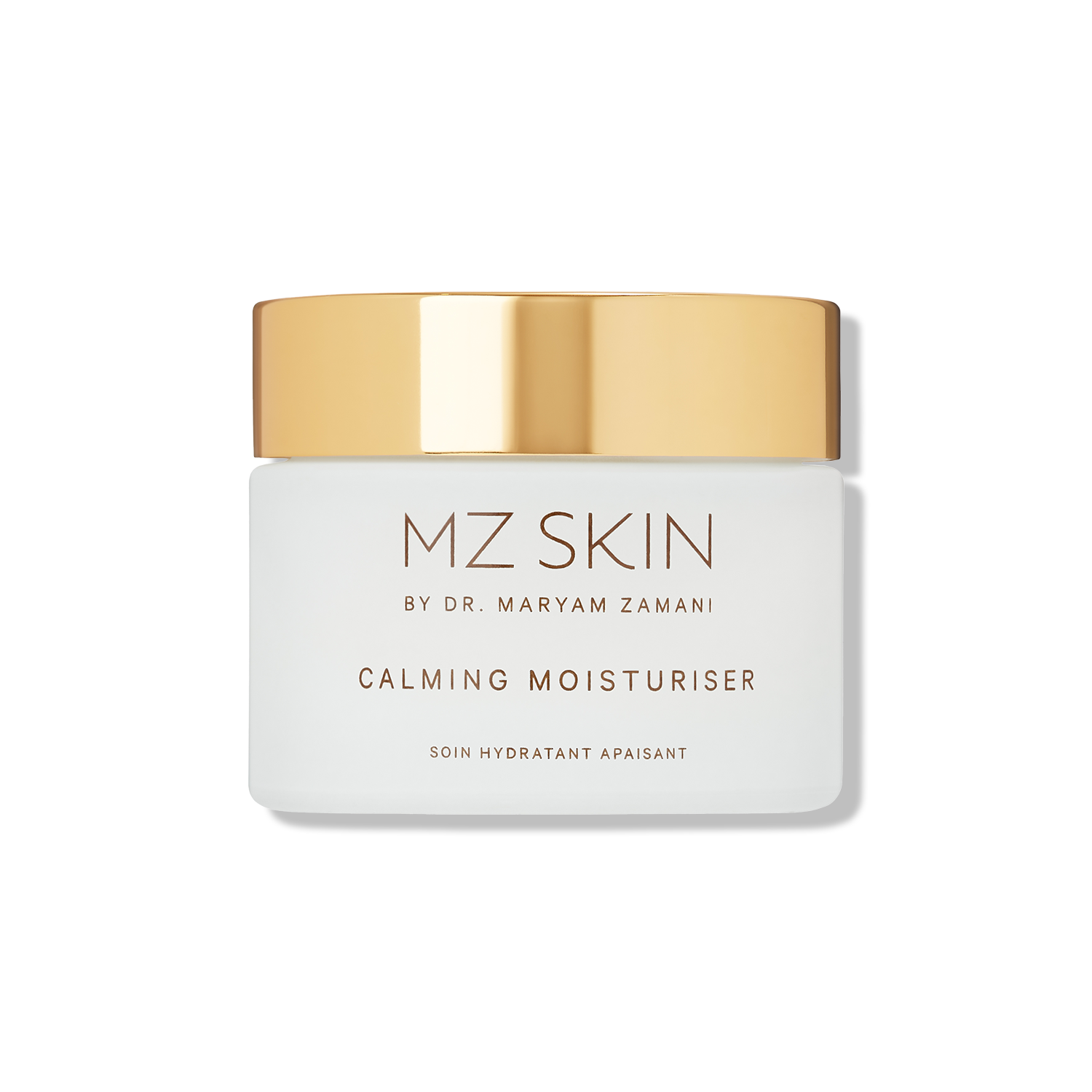
Protect and Seal - The Rich Moisturiser
Every active ingredient in your routine performs better when the skin barrier is intact and well hydrated. The Rich Moisturiser delivers this foundation with Hyaluronic Acid, Peptides and Ceramides - ingredients with well-established evidence for improving skin hydration, firmness and barrier function ¹² ¹³. It provides a deeply nourishing layer that seals in the treatment actives below and visibly plumps fine lines from the outside in.
How to use: Apply as the final step in your routine, morning and night, after serums and eye cream. In the morning, follow with SPF.
Amplify - LightMax Supercharged LED Mask 2.0
No topical routine alone can replicate what clinical-wavelength light does at the cellular level. The LightMax Supercharged LED Mask 2.0 delivers red and blue LED wavelengths that penetrate the skin to stimulate collagen production, reduce inflammation and accelerate cellular repair - addressing the structural causes of ageing rather than its surface symptoms ¹⁶.
Red light at 630 to 700nm targets collagen and elastin synthesis. Blue light addresses surface concerns including congestion. Used three to five times per week for ten minutes, the mask measurably enhances the performance of every product in your routine by increasing cellular receptivity to topical actives ⁷.
How to use: Use on cleansed skin before applying serums, three to five times per week. Allow ten minutes for the treatment cycle to complete before continuing with your routine.
The 40s are not a skincare crisis. They are a call to precision. With the right ingredients, the right technology, and a routine that compounds over time, your skin in your fourth decade can be the best it has ever been.
FAQ: Skincare in Your 40s
1. What should a skincare routine for your 40s include?
A skincare routine for your 40s should include a gentle cleanser, a targeted treatment serum - ideally one containing retinol or peptides - a dedicated eye cream, a nourishing moisturiser with barrier-supporting ingredients such as ceramides and hyaluronic acid, and a broad-spectrum SPF every morning. For those looking to go further, incorporating an LED light therapy device three to five times per week can significantly amplify the results of topical products by stimulating collagen at a cellular level.
2. When should I start using retinol?
There is no single right age to start retinol, but your 40s are an important time to introduce it if you have not already. Collagen production declines by approximately one percent per year from the mid-20s, and retinol is one of the most clinically evidenced ingredients available to support cell turnover and collagen synthesis. Begin with a low-concentration formula applied two evenings per week and build frequency gradually as your skin acclimatises. Those with sensitive skin may prefer Bakuchiol, a plant-derived alternative with comparable anti-ageing benefits and fewer side effects.
3. Is retinol safe to use around the eyes?
Retinol should not be applied directly to the eye area. The skin here is significantly thinner and more sensitive than the rest of the face, and it requires a dedicated formulation designed specifically for this area. Look for eye creams that contain peptides, Bakuchiol, hyaluronic acid, and growth factor technologies such as Bio-Placenta, which address the unique concerns of the eye contour - fine lines, sagging, dark circles and puffiness - without the risk of irritation associated with vitamin A.
4. Why does the skin around my eyes age faster than the rest of my face?
The skin around the eyes is up to ten times thinner than skin elsewhere on the face, which makes it more vulnerable to environmental stressors, collagen loss, and the visible effects of repeated muscle movement. It also has fewer sebaceous glands, meaning it produces less of the natural oils that help maintain moisture and barrier function. This combination means fine lines, hollowness, and discolouration tend to appear here first and progress more visibly than on other areas of the face.
5. What is the difference between an eye cream and a face moisturiser?
Eye creams are specifically formulated and clinically tested for the delicate, thin skin around the orbital area. They typically contain different active ingredients - such as peptides to target the specific causes of dark circles, caffeine to reduce puffiness, or growth factors to address sagging and loss of firmness - at concentrations and textures appropriate for this sensitive area. A face moisturiser is designed for the thicker, more resilient skin of the face and extending it to the eye area will not deliver the same targeted results.
6. How does LED light therapy benefit skin in your 40s?
LED light therapy uses specific wavelengths of light to stimulate biological processes within the skin that topical ingredients cannot reach alone. Red light at 630 to 700nm has been clinically shown to stimulate fibroblast activity, increase collagen production, and reduce the appearance of fine lines. Blue light targets surface concerns including congestion and acne. Used consistently three to five times per week, LED therapy measurably improves skin texture and firmness, and increases cellular receptivity to the active ingredients applied afterwards in your routine.
7. What is Bio-Placenta and is it vegan?
Bio-Placenta is a biomimetic, lab-grown ingredient that replicates the regenerative growth factors found in human placenta - including Epidermal Growth Factor (EGF) and Acidic Fibroblast Growth Factor - without any animal-derived components. It is 100% vegan and cruelty-free. EGF stimulates fibroblasts to produce collagen and hyaluronic acid, accelerating skin renewal and improving firmness and texture over time. Bio-Placenta is the hero ingredient in the MZ SKIN Bio-Placenta Collection and is formulated at therapeutic concentrations to deliver measurable, visible results.
8. How long does it take to see results from an anti-ageing skincare routine?
Natural skin cell turnover takes between four and six weeks in your 40s, compared to approximately 28 days in your 20s. As a general rule, you should allow a minimum of one full skin cycle - four to six weeks - before assessing results from new skincare products. Ingredients such as hyaluronic acid and peptides can deliver visible hydration and plumping effects more quickly, while retinol and Bio-Placenta technologies require consistent use over eight to twelve weeks to deliver their full structural benefits. The most significant improvements come with long-term, daily commitment.
9. Can I use a retinol serum and an LED mask in the same routine?
Yes, but the order matters. Use the LED mask on cleansed skin before applying any serums or actives. LED light therapy increases the skin's cellular receptivity, which means the active ingredients applied afterwards - including retinol - are absorbed more effectively. Applying retinol before LED treatment is not recommended as it may increase photosensitivity. Always follow LED treatment with your serum, eye cream and moisturiser as normal.
10. How do I know if my skin barrier is compromised?
Common signs of a compromised skin barrier include persistent dryness or flaking, increased sensitivity or stinging when applying products that previously felt comfortable, redness that does not resolve, a tight or uncomfortable feeling after cleansing, and skin that fluctuates between oily and dry. In your 40s, hormonal changes can accelerate barrier disruption, particularly in the lead-up to perimenopause. Prioritising barrier-supporting ingredients - ceramides, hyaluronic acid, and peptides - at every step of your routine is the most effective way to restore and maintain barrier integrity.
References
-
Shuster S, Black MM, McVitie E. The influence of age and sex on skin thickness, skin collagen and density. British Journal of Dermatology. 1975;93(6):639-643.
-
Thornton MJ. Estrogens and aging skin. Dermato-Endocrinology. 2013;5(2):264-270.
-
Brincat MP, Muscat Baron Y, Galea R. Estrogens and the skin. Climacteric. 2005;8(2):110-123.
-
Ghadially R, Brown BE, Sequeira-Martin SM, Feingold KR, Elias PM. The aged epidermal permeability barrier. Journal of Clinical Investigation. 1995;95(5):2281-2290.
-
Zouboulis CC, Blume-Peytavi U, Kosmadaki M, et al. Skin, hair and beyond: the impact of menopause. Climacteric. 2022;25(5):434-442.
-
Verdier-Sévrain S. Effect of estrogens on skin aging and the potential role of selective estrogen receptor modulators. Climacteric. 2007;10(4):289-297.
-
Wunsch A, Matuschka K. A controlled trial to determine the efficacy of red and near-infrared light treatment in patient satisfaction, reduction of fine lines, wrinkles, skin roughness, and intradermal collagen density increase. Photomedicine and Laser Surgery. 2014;32(2):93-100.
-
Mukherjee S, Date A, Patravale V, Korting HC, Roeder A, Weindl G. Retinoids in the treatment of skin aging. Clinical Interventions in Aging. 2006;1(4):327-348.
-
Kong R, Cui Y, Fisher GJ, et al. A comparative study of the effects of retinol and retinoic acid on histological, molecular, and clinical properties of human skin. Journal of Cosmetic Dermatology. 2016;15(1):49-57.
-
Dhaliwal S, Rybak I, Ellis SR, et al. Prospective, randomized, double-blind assessment of topical bakuchiol and retinol for facial photoageing. British Journal of Dermatology. 2019;180(2):289-296.
-
Gorouhi F, Maibach HI. Role of topical peptides in preventing or treating aged skin. International Journal of Cosmetic Science. 2009;31(5):327-345.
-
Lintner K, Mas-Chamberlin C, Mondon P, Peschard O, Lamy L. Cosmeceuticals and active ingredients. Clinics in Dermatology. 2009;27(5):461-468.
-
Papakonstantinou E, Roth M, Karakiulakis G. Hyaluronic acid: A key molecule in skin aging. Dermato-Endocrinology. 2012;4(3):253-258.
-
Pavicic T, Gauglitz GG, Lersch P, et al. Efficacy of cream-based novel formulations of hyaluronic acid of different molecular weights in anti-wrinkle treatment. Journal of Drugs in Dermatology. 2011;10(9):990-1000.
-
Berlanga-Acosta J, Gavilondo-Cowley J, Lopez-Saura P, et al. Epidermal growth factor in clinical practice - a review of its biological actions, clinical indications and safety implications. International Wound Journal. 2009;6(5):331-346.
-
Avci P, Gupta A, Sadasivam M, et al. Low-level laser (light) therapy (LLLT) in skin: stimulating, healing, restoring. Seminars in Cutaneous Medicine and Surgery. 2013;32(1):41-52.