


Redness and Sensitivity: Why Your Skin Barrier Is the Root Cause
Redness and sensitivity are among the most common concerns presented in Dr Zamani's Chelsea clinic - and among the most persistently mismanaged. Patients arrive having cycled through products, stripped their routines back entirely, or avoided active ingredients for months, often making the situation considerably worse in the process. What is rarely addressed is the underlying reason the skin became reactive in the first place: a compromised skin barrier. Understanding this is where effective treatment begins.
What the Skin Barrier Actually Does
The skin barrier (more precisely, the stratum corneum) is your body's primary defence system. A lipid-rich structure composed of ceramides, fatty acids and cholesterol, it performs two critical and simultaneous functions: retaining essential moisture within the skin and preventing external aggressors from entering it ¹.
When functioning optimally, skin feels calm, balanced and resilient. When disrupted, the effects are both immediate and cumulative. Microscopic breaks form within the lipid matrix, hydration is lost through transepidermal water loss ², and external aggressors penetrate more easily. The skin responds with inflammation, visible as redness and heightened sensitivity ³. This is not the skin failing, but the skin signalling. The focus should not be to suppress these responses, but to intelligently support repair, restoring barrier integrity, reinforcing hydration, and re-establishing equilibrium for long term skin health.
What Damages the Barrier?
Common causes of barrier disruption include environmental stressors such as pollution and UV exposure ⁴, over-exfoliation through the misuse of high-percentage acids or physical scrubs, and the natural decline in lipid and ceramide production that comes with biological ageing ⁵. Hormonal fluctuation, disrupted sleep and chronic stress each compound the problem further ⁶. In many cases, the products people reach for to manage redness are precisely those accelerating its cause.
The Cycle That Keeps Sensitive Skin Reactive
Treating redness and sensitivity with aggressive actives, including high-strength acids, harsh foaming cleansers and physical scrubs, is clinically counterproductive. These approaches strip essential lipids, weakening the barrier further and perpetuating inflammation rather than resolving it ⁷.
Restoration must come first. Before the skin can respond to corrective treatments, it needs to rebuild strength, hydration and balance. At MZ SKIN, this principle is central. The Reveal, Enhance, Protect philosophy is designed to support skin intelligently, beginning with renewal, followed by targeted optimisation, and always reinforced with protection. Because meaningful, lasting results are only possible when the skin is functioning at its healthiest.
The MZ SKIN Roadmap to Barrier Recovery
Step One: Reveal
Cleansing is the first intervention, and the most frequently compromised. Traditional foaming formulas use actives that dissolve the lipids the barrier depends on to maintain its seal. For reactive, redness-prone skin, this creates a deficit from the very first step of the routine.
The Calming Cream Cleanser is specifically engineered for sensitive and reactive skin. Infused with a Prebiotic Complex derived from Chicory Root to rebalance the skin microbiome ⁸, and a blend of Sweet Almond and Jojoba Oils to deliver essential fatty acids that mimic the skin's natural lipids, it purifies without stripping. Bisabolol and Vitamin E work synergistically to calm an irritated barrier at the moment of contact. This is not simply cleansing, it is the beginning of structural repair.
Step Two: Enhance
A reactive skin barrier is characterised by chronic, low-grade inflammation. Breaking that cycle requires targeted actives delivered at therapeutic concentrations - ingredients that signal the epidermis to enter repair mode.
The Calming Rescue Serum is designed to address this at the source. A prebiotic formula enriched with soothing antioxidant botanicals and microbiome-balancing actives, it works progressively to strengthen the barrier, calm redness and restore resilience. Central to the formulation is Glucoside Complex, a 5-in-1 active that helps rebalance and brighten the complexion while visibly minimising redness. Its cooling, fast-absorbing texture delivers immediate comfort, while the formula works beneath the surface over time to support long term skin health.
For skin in a more acute state of stress, the Hydra-Boost Ampoules offer a five-day intensive reset. This advanced programme delivers a targeted sequence of Hydrating, Calming and Collagen boosters, combining Sodium Hyaluronate ⁹, Bisabolol, Ceramide NP ¹⁰, Squalane and bio-active botanicals, including Myrothamnus flabellifolia, the "resurrection plant". Working across multiple layers of the stratum corneum, the treatment replenishes moisture, soothes inflammation and reinforces the skin barrier while supporting collagen function. The result is skin that feels immediately hydrated and comforted, with improvements in smoothness, resilience and overall vitality over the course of the programme.
Step Three: Protect
A moisturiser designed for true barrier recovery must go beyond surface hydration. It should actively replenish the skin's lipid matrix, delivering bio-compatible lipids that integrate seamlessly into the stratum corneum to reduce transepidermal water loss and restore balance.
The Rich Moisturiser is formulated to do exactly this. A Ceramide Complex helps reinforce the skin's natural protective seal ¹⁰, while Encapsulated Hyaluronic Acid delivers sustained hydration within the epidermis ⁹. Peptides and micro-algae support collagen activity and help calm visible signs of inflammation, while bio-identical growth factors encourage skin renewal. Applied morning and evening, it completes the routine, sealing in hydration and creating the optimal environment for the barrier to recover and strengthen.
Daily SPF is an essential final step. UV exposure is one of the primary drivers of barrier disruption, accelerating oxidative stress and compromising skin integrity ⁴. The Expert UV Protector SPF50 provides broad-spectrum UVA and UVB defence, alongside Vitamins C and E for antioxidant support, and Hyaluronic Acid to maintain hydration and minimise daily moisture loss.
A Note on Patience
Barrier repair is not instantaneous and should not be treated as such. The skin renews itself over a cycle of approximately 28 days (extending to 45 to 60 days by the 40s) ¹¹. Meaningful improvement in redness and sensitivity requires consistent, focused care applied over several weeks. The transition period may involve some surface adjustment. This is a physiological response, not a reason to abandon the process.
Redness and sensitivity are not permanent states. They are the skin communicating that its first line of defence needs support. When that support is given consistently (with the right formulations, in the right sequence) the barrier rebuilds. Reactivity decreases. Resilience returns.
Skin longevity is not built through dramatic intervention. It is built through small, evidence-based actions repeated daily.
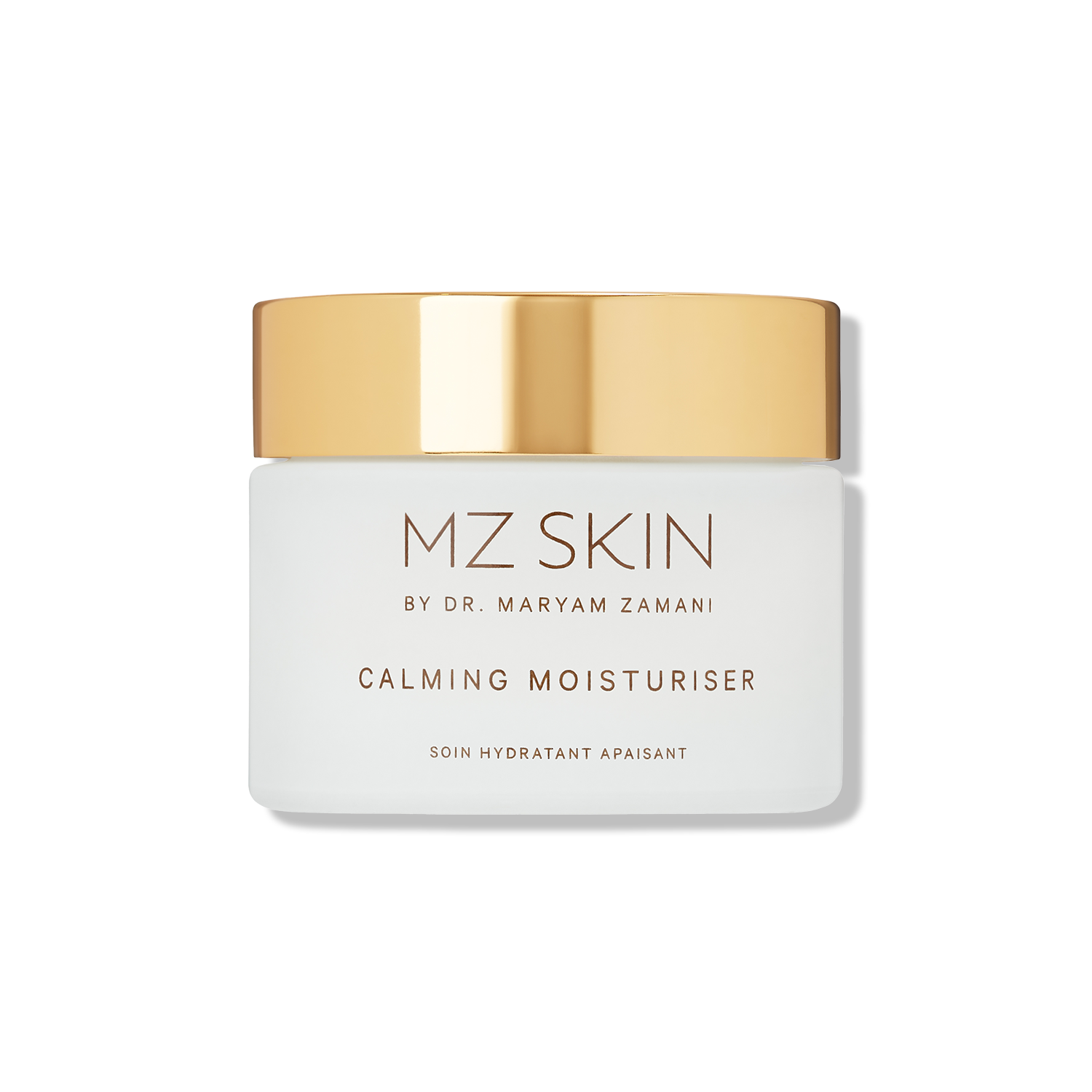
Explore the MZ SKIN Calming Collection to begin your barrier recovery ritual.
Frequently Asked Questions
What is the skin barrier and why does it cause redness?
The skin barrier is the outermost layer of the skin (the stratum corneum), a lipid-rich structure that retains moisture and blocks external aggressors. When it is disrupted, irritants penetrate more easily and the immune system responds with inflammation, visible as redness and sensitivity. Repairing the barrier rather than suppressing redness directly is the most clinically effective approach.
What are the signs of a damaged skin barrier?
Common indicators include persistent redness, a stinging or burning sensation when applying products, increased sensitivity to ingredients previously well tolerated, skin that feels tight after cleansing, and an uptick in breakouts or dry patches. If several of these apply, barrier repair should be the priority before any corrective actives are introduced.
Can I use active ingredients if my skin barrier is compromised?
Not until the barrier has been stabilised. Introducing retinoids, high-strength acids or exfoliants to a compromised barrier will accelerate damage rather than deliver results. A minimum of four to six weeks of barrier-focused care is recommended before reintroducing actives.
How long does it take to repair the skin barrier?
The skin renews itself over a cycle of approximately 28 days, extending to 45 to 60 days in the 40s. Most patients begin to notice a meaningful reduction in sensitivity and redness within four to six weeks of consistent barrier-focused care. Full structural recovery may take longer, depending on the degree of damage and consistency of the routine.
What ingredients repair the skin barrier most effectively?
Ceramides, fatty acids, cholesterol, hyaluronic acid and peptides are the most clinically evidenced ingredients for barrier repair. Prebiotic actives that support the skin microbiome, such as inulin derived from chicory root, also play an important role in restoring the skin's natural defences.
Is redness always caused by a damaged skin barrier?
Not always. Redness can be driven by rosacea, allergic reactions, hormonal fluctuation or environmental triggers. However, a compromised skin barrier is one of the most common underlying factors and is frequently overlooked. If redness is persistent rather than episodic, barrier integrity should be assessed as part of the diagnostic process.
What is the difference between sensitivity and a damaged skin barrier?
Sensitivity is a symptom. A damaged skin barrier is frequently its cause. When the barrier is intact, the skin can regulate its response to external stressors. When it is disrupted, even mild products or environmental exposure can trigger a disproportionate reaction. Restoring the barrier typically reduces sensitivity significantly over time.
References
-
Proksch E, Brandner JM, Jensen JM. The skin: an indispensable barrier. Experimental Dermatology. 2008;17(12):1063-1072.
-
Fluhr JW, Darlenski R, Angelova-Fischer I, Tsankov N, Berardesca E. Skin irritability and irritant contact dermatitis: Epidemiological, functional and biochemical aspects. Contact Dermatitis. 2008;58(2):65-78.
-
Elias PM, Wakefield JS. Mechanisms of abnormal lamellar body secretion and the dysfunctional skin barrier in patients with atopic dermatitis. Journal of Allergy and Clinical Immunology. 2014;134(4):781-791.
-
Rittie L, Fisher GJ. UV-light-induced signal cascades and skin aging. Ageing Research Reviews. 2002;1(4):705-720.
-
Ghadially R, Brown BE, Sequeira-Martin SM, Feingold KR, Elias PM. The aged epidermal permeability barrier. Journal of Clinical Investigation. 1995;95(5):2281-2290.
-
Chiu A, Chon SY, Kimball AB. The response of skin disease to stress: changes in the severity of acne vulgaris as affected by examination stress. Archives of Dermatology. 2003;139(7):897-900.
-
Draelos ZD. The science behind skin care: cleansers. Journal of Cosmetic Dermatology. 2018;17(1):8-14.
-
Bowe WP, Logan AC. Acne vulgaris, probiotics and the gut-brain-skin axis. Gut Pathogens. 2011;3(1):1.
-
Papakonstantinou E, Roth M, Karakiulakis G. Hyaluronic acid: a key molecule in skin aging. Dermato-Endocrinology. 2012;4(3):253-258.
-
Coderch L, Lopez O, de la Maza A, Parra JL. Ceramides and skin function. American Journal of Clinical Dermatology. 2003;4(2):107-129.
-
Ghadially R, Brown BE, Sequeira-Martin SM, Feingold KR, Elias PM. The aged epidermal permeability barrier. Journal of Clinical Investigation. 1995;95(5):2281-2290.