


What to Put on Your Skin After a Laser Treatment: A Surgeon's Guide
The procedure is done. And for good reason: Laser treatments are among the most powerful tools available for meaningful skin transformation, delivering improvements in texture, tone, pigmentation, firmness, and collagen density that topical skincare alone cannot achieve.
At Dr Zamani's Chelsea clinic, a full suite of laser and light treatments is offered, from non-ablative options such as MOXI and Laser Genesis through to hybrid resurfacing with HALO, BroadBand Light for pigmentation, and fully ablative CO2 resurfacing for more significant concerns. Each modality is chosen and calibrated to the individual's skin, goals, and downtime tolerance. What they share is this: The result they deliver is only as good as the aftercare that follows.
What happens in the days and weeks after laser treatment determines whether those results hold, deepen, or are compromised. Dr Zamani sees this routinely: Patients who have had outstanding procedures and then unknowingly undermine them by returning too quickly to their usual routine, or by applying the wrong products during the window when the skin is at its most vulnerable and most receptive state. Post-laser skincare is not an afterthought. It is where the result is either protected or fully realised.
What Is Happening to Your Skin After Laser
Laser treatments work by delivering targeted energy into the skin. Depending on the modality, this energy may ablate the surface layers to stimulate fresh cell growth, heat the dermis to trigger collagen remodelling, or target chromophores such as melanin or haemoglobin with precision to clear pigmentation and vascular concerns.
In every case, the treatment initiates the skin's repair cascade: Controlled inflammation, cellular proliferation, and finally remodelling, producing the improvements in firmness, clarity, and texture that make laser one of the most effective interventions in aesthetic medicine. The visible manifestations in the days that follow, including redness, warmth, and in ablative cases, surface peeling, are not side effects. They are the physiology of the skin rebuilding itself.
This is also why what you apply during recovery matters so much. The barrier is temporarily compromised. The skin's tolerance for actives is at its lowest. And its capacity to absorb whatever is placed on it is at its highest, for better or worse.
The Post-Laser Timeline: What to Expect and When
Days 1 to 3: Acute phase
Expect redness, heat, swelling, and in ablative procedures, weeping or crusting. The skin needs protection, gentle hydration, and nothing else. This is not the time for actives of any kind.
Priorities: Keep the skin clean, hydrate without occluding, and protect from environmental contamination. Do not touch, pick, or exfoliate.
Days 4 to 7: Early repair phase
The acute inflammatory response begins to resolve. Surface peeling, flaking, or dryness may intensify as the skin sheds damaged cells and new cells arrive beneath. This is the process working exactly as it should. Resist any urge to accelerate it mechanically; it is occurring on the skin's own timeline.
Priorities: Continue gentle hydration, introduce a targeted barrier-repair treatment if tolerated, and begin daily SPF once the surface is intact.
Weeks 2 to 4: Active recovery
The skin's surface has largely re-epithelialised. New cells are arriving and collagen synthesis is well underway in the dermis. Sensitivity is diminishing and the skin is beginning to reveal the improvements the procedure has initiated. Performance actives may begin to be reintroduced cautiously, depending on the procedure type and individual response.
Priorities: Barrier reinforcement, sustained hydration, antioxidant support, and disciplined daily SPF.
Month 2 Onwards: Visible Results
With guidance from your treating clinician, a full performance routine including retinol and targeted serums can typically resume. The collagen remodelling stimulated by the laser continues for three to six months post-procedure. This is the period when the full reward of the investment becomes visible: Improved firmness, refined texture, clearer tone, and the kind of skin quality that reflects the depth of the treatment.
Ingredients to Prioritise After Laser Treatment
Hyaluronic Acid (Sodium Hyaluronate)
Hydration is the first and most consistent priority after laser treatment. Dehydrated post-laser skin heals more slowly, is more prone to discomfort, and is at greater risk of post-inflammatory pigmentation, particularly in darker skin tones.
The Bio-Placenta Hyaluronic Acid Serum uses a 4D hyaluronic acid complex: four molecular weights that penetrate multiple layers of the skin simultaneously, providing both an immediate surge of hydration and sustained replenishment over time. It was clinically proven to improve skin hydration by 56.5% after just 30 minutes. In the post-laser recovery context, this multi-depth delivery is particularly valuable: the skin needs moisture reaching the layer of new cell formation, not just at the surface.
For the eye contour, where the skin is thinnest and post-laser sensitivity is most acute, the Soothe & Smooth Hyaluronic Brightening Eye Complex delivers hydrolysed hyaluronic acid alongside Ceramide NP to restore moisture and resilience to the most delicate area of the face.
Ceramides
The skin's barrier is only as functional as its lipid matrix. Post-laser, that matrix is depleted, and rebuilding it requires bio-compatible lipids that the skin can directly incorporate into the stratum corneum. The Hydra-Boost Ampoules deliver Ceramide NP alongside Sodium Hyaluronate, squalane, and bisabolol across a five-day intensive programme. Applied from day four or five post-treatment (subject to clinician guidance), the ampoule format provides concentrated, sequential delivery of repair-supporting actives without the risk of overloading skin that cannot yet handle a full routine.
Bisabolol
Post-laser inflammation is expected and necessary, but it still benefits from intelligent management. Bisabolol is a clinically validated anti-inflammatory compound that works without disrupting the repair cascade. It reduces redness and sensory discomfort at the point of contact, and its penetration-enhancing properties support the delivery of co-actives into recovering tissue. It features in both the Hydra-Boost Ampoules and the Calming Cream Cleanser: delivering calming action at the moments of highest skin vulnerability.
Squalane
A plant-derived lipid that mirrors the skin's own sebum, squalane reinforces the lipid barrier and prevents moisture loss without the occlusive weight of petrolatum-based products. It is exceptionally well-tolerated in post-procedure contexts, making it an appropriate emollient throughout every stage of recovery.
Peptides
Once the skin has passed the acute phase, typically from week two onwards, peptides become a valuable addition to the routine. They signal the dermis to increase collagen and elastin synthesis, complementing and extending the remodelling already triggered by the laser, without the adaptation challenges of retinol. The Rich Moisturiser delivers peptides alongside a Ceramide Complex, Encapsulated Hyaluronic Acid, and bio-identical growth factors, making it well suited to the later stages of post-laser care and the ongoing collagen-building phase that follows.
Ingredients to Avoid After Laser Treatment
Retinoids: Reintroduce only with clinician guidance, typically from week four to six at the earliest. Post-laser skin cannot manage the rate of cell turnover retinoids drive.
AHAs and BHAs: Exfoliating actives of any kind are contraindicated in the acute and early recovery phases. The skin is already shedding at an accelerated rate; chemical exfoliation compounds this.
High-concentration Vitamin C: High-percentage L-ascorbic acid formulations can sting and irritate post-laser skin significantly. Antioxidant Vitamin C delivered in a stabilised form, as in the Expert UV Protector SPF50, is appropriate. Standalone high-concentration C serums should wait until full recovery.
Fragrance and essential oils: Post-laser skin is highly permeable. Fragrance is among the most common contact sensitisers and carries a substantially elevated risk of reaction in recovering tissue.
Physical exfoliation: Avoid entirely until at least two to three weeks post-procedure.
SPF: The Non-Negotiable
Post-laser skin is highly vulnerable to UV-induced pigmentation. UV exposure in the weeks following a procedure can compromise results by re-stimulating melanin production in newly formed cells, counteracting the very improvements the treatment has worked to deliver.
The Expert UV Protector SPF50 provides broad-spectrum UVA and UVB defence alongside antioxidant Vitamins C and E and Hyaluronic Acid, covering photoprotection, oxidative defence, and hydration in a single step. Apply every morning without exception once the skin surface is intact.
The MZ SKIN Post-Laser Protocol
Reveal
The Calming Cream Cleanser is fragrance-free, lipid-rich, and built around bisabolol and a Prebiotic Complex. It purifies without stripping, making it appropriate for the sensitivity of recovering skin throughout every stage of recovery.
Enhance
The Calming Serum from days four to five, delivering concentrated active ingredients in sequential doses to calm reactivity and support the skin barrier as it begins to recover. From week two, the Bio-Placenta Hyaluronic Acid Serum maintains deep hydration and supports the ongoing collagen activity as the skin continues to remodel and reveal its results.
Protect
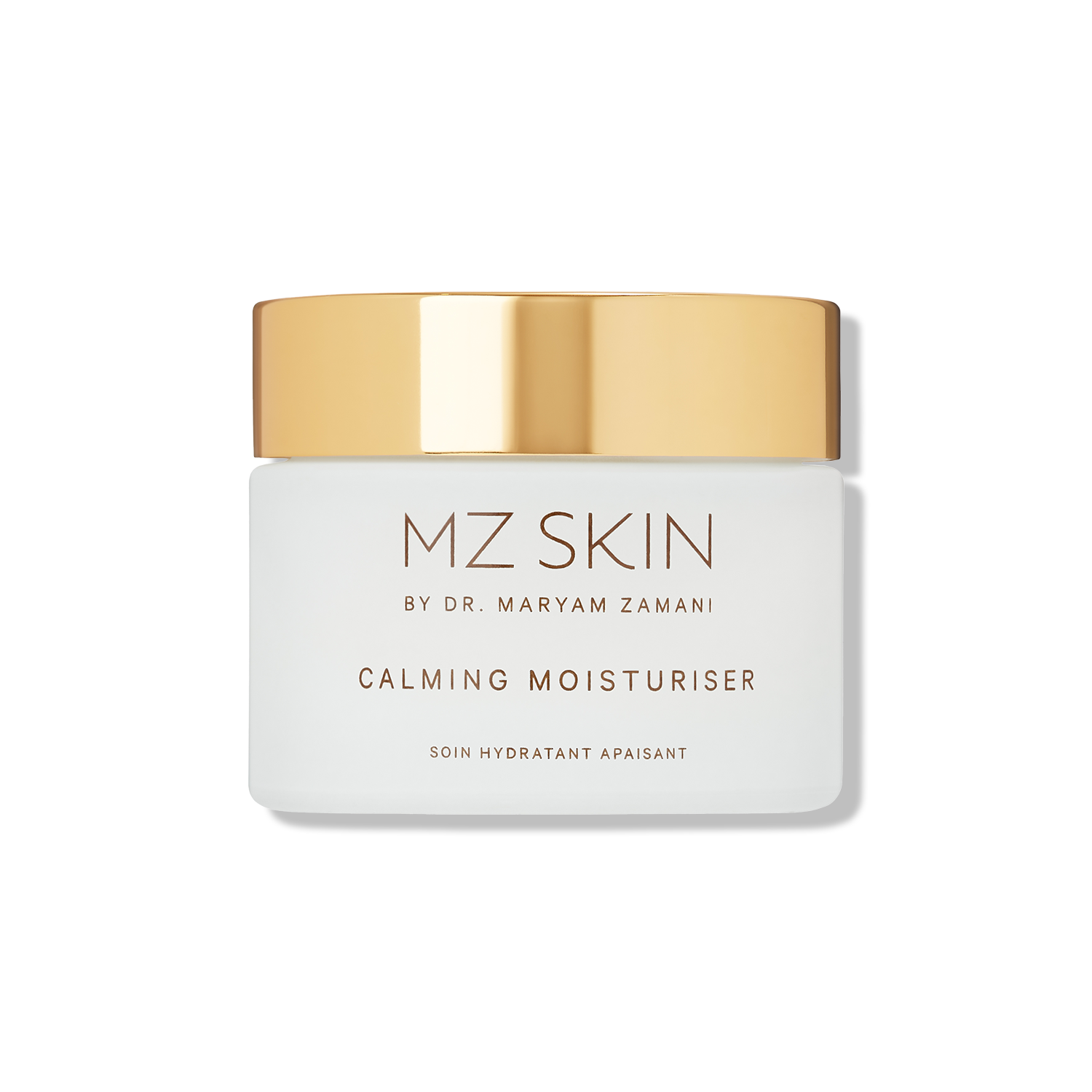
The Calming Moisturiser applied morning and evening from day five onwards, sealing in hydration and supporting barrier recovery while soothing sensitised skin at every stage of healing.
Shop the Calming Cleanser, Calming Serum and Calming Moisturiser together as the MZ SKIN Calming Bundle.
A Note on the Timeline of Results
Laser results unfold over months, not days, and that is precisely what makes them so worthwhile. The collagen remodelling triggered by a treatment like HALO, BBL, or CO2 resurfacing continues for three to six months post-procedure. Skin that looked pink and tender at day five will look noticeably firmer, clearer, and more refined by month three. The full reward is revealed gradually, and consistently supported aftercare is what ensures it is fully realised.
Post-laser skincare is not a temporary inconvenience. It is the final, essential phase of the treatment itself.
Frequently Asked Questions
What should I put on my skin immediately after laser treatment?
In the first 24 to 48 hours, keep it simple: a gentle, fragrance-free cleanser, a hydrating serum with hyaluronic acid and ceramides, and nothing else. No actives, no exfoliants, no fragranced products. Your treating clinician will advise on anything specific to your procedure, but less is always more in the acute phase.
When can I use retinol after laser treatment?
For non-ablative treatments such as MOXI or BBL, retinol can typically be reintroduced from around two to four weeks post-procedure. For more ablative resurfacing, wait a minimum of four to six weeks. Always reintroduce gradually, starting two to three evenings per week, and take guidance from your clinician before doing so.
Can I wear makeup after laser treatment?
It is best to avoid makeup entirely for the first 48 hours to allow the skin to breathe and begin healing undisturbed. When you do reintroduce it, choose mineral formulas only, avoiding anything containing fragrance, alcohol, or occlusive silicones, which can trap heat and slow recovery.
When can I exercise after laser treatment?
Avoid anything that raises your heart rate significantly or causes sweating for at least 48 hours post-treatment. Increased blood flow and heat can intensify redness and irritation in recovering skin. Light walking is fine; anything more strenuous should wait until the acute phase has resolved.
How do I prevent pigmentation after laser treatment?
Daily broad-spectrum SPF50, applied every morning without exception, is the single most important step. UV exposure in the weeks following a procedure can undo results by triggering melanin production in newly formed skin cells. Antioxidant support with Vitamins C and E, as found in the Expert UV Protector SPF50, provides an additional layer of protection.
What are the most common post-laser skincare mistakes?
Returning to a full routine too quickly is the most frequent. Exfoliating too soon, reintroducing retinol before the barrier has recovered, and using products containing fragrance or high-concentration acids are all common errors. Skipping SPF is the most consequential. And using too many products at once overloads a skin that needs simplicity and consistency above all else.
How long does skin take to heal after laser treatment?
Surface healing takes approximately seven to fourteen days for non-ablative procedures and two to four weeks for ablative resurfacing. The deeper remodelling process, where the real results emerge, continues for three to six months. The skin you see at week one bears little resemblance to the skin you will have at month three.
Shop MZ SKIN post-treatment skincare to support your skin's recovery from the first day.