


Reactive Skin in Summer: Why Heat Makes Sensitivity Worse
Skin that feels perfectly settled for most of the year can turn unpredictable the moment temperatures climb, and the change rarely announces itself gently. Redness appears where there was none before, products that have always been tolerated suddenly start to sting, and a flush that used to fade within minutes now lingers well past its welcome. Dr Maryam Zamani sees this same pattern return in clinic every summer, and by now she is certain it is not a coincidence.
Why Heat Triggers Reactivity
Heat increases transepidermal water loss, the rate at which moisture evaporates from the skin's surface. As this accelerates, skin becomes dehydrated even in humid conditions, and a dehydrated barrier is far less able to defend itself against irritants, allergens and friction. At the same time, heat causes blood vessels near the skin's surface to dilate, which is why flushing, redness and a feeling of heat in the skin are so common once temperatures rise. Calming Rescue Serum was formulated for exactly this response. It is clinically proven to reduce redness by nearly 26% and improve reddened areas by close to 17% after three months of use, powered by Red Sage Root, Centella Asiatica and a Glucoside Complex that work to calm inflammation and rebalance the skin's microbiome.
Sweat, Friction and Irritation
Sweat itself is not the problem. The difficulty comes when it lingers on the skin, mixes with sunscreen, oil or environmental pollution, or becomes trapped under clothing. This combination is enough to cause itching, prickling and small heat bumps, particularly around the neck, hairline and areas where clothing sits close to the skin. Friction from fabric rubbing against already-compromised skin adds to the irritation rather than causing it outright. Cleansing gently but thoroughly at the end of the day matters here. The Calming Cream Cleanser removes the buildup of sweat, SPF and environmental residue without stripping the skin barrier further, which is the last thing reactive skin needs after a hot day.
UV Exposure and Inflammation
Sun exposure adds a further layer of stress. UV radiation generates oxidative damage and inflammation in the skin, and this effect compounds when the barrier is already disrupted by heat and dehydration. This is also why pigmentation-prone skin, including melasma, tends to worsen in summer specifically. Heat alone can activate the pigment-producing cells responsible for melasma, even without direct sun exposure, so managing heat itself, by staying cool and limiting time in direct warmth, is as important as sun protection. UV radiation is still present on overcast days, since cloud cover blocks only a fraction of UVA and UVB rays, which is why consistent SPF matters just as much on a hot, cloudy day as it does on a clear one. Expert UV Protector SPF50 was formulated with this kind of barrier stress in mind, pairing broad-spectrum UVA and UVB protection with niacinamide and panthenol to support the skin barrier, alongside Arabian cotton stem cell extract to help calm and soothe skin already reactive from heat and sun exposure.
Signs Your Skin Is Heat-Stressed
Heat-stressed, reactive skin tends to show a consistent pattern: Redness, stinging, tightness, a rougher texture than usual, increased sensitivity to products that were previously well tolerated, and dry patches that appear despite sweating more than usual. Flushing that takes longer than normal to settle is another common sign, particularly for anyone already prone to redness.d
How to Calm Reactive Skin This Summer
The instinct in hot weather is often to do more, adding extra steps to compensate for how uncomfortable skin feels. In practice, the opposite tends to help. A simplified routine, focused on gentle cleansing, lightweight hydration and barrier support, gives reactive skin room to recover rather than adding further stimulus. The Calming Cream Cleanser and Calming Rescue Serum work well together as a pared-back summer routine on their own, without needing to be layered under a longer list of products. Apply Calming Rescue Serum morning and evening, two to three drops onto clean, dry skin, followed by moisturiser and, in the morning, sunscreen. Introducing several new active ingredients at once during a heatwave makes it harder to identify what is actually causing irritation, so it is worth holding off on anything new until skin has settled.
Daily SPF remains essential throughout, both to protect an already-compromised barrier from further UV stress and to reduce the risk of heat-triggered pigmentation.
The MZ SKIN Approach
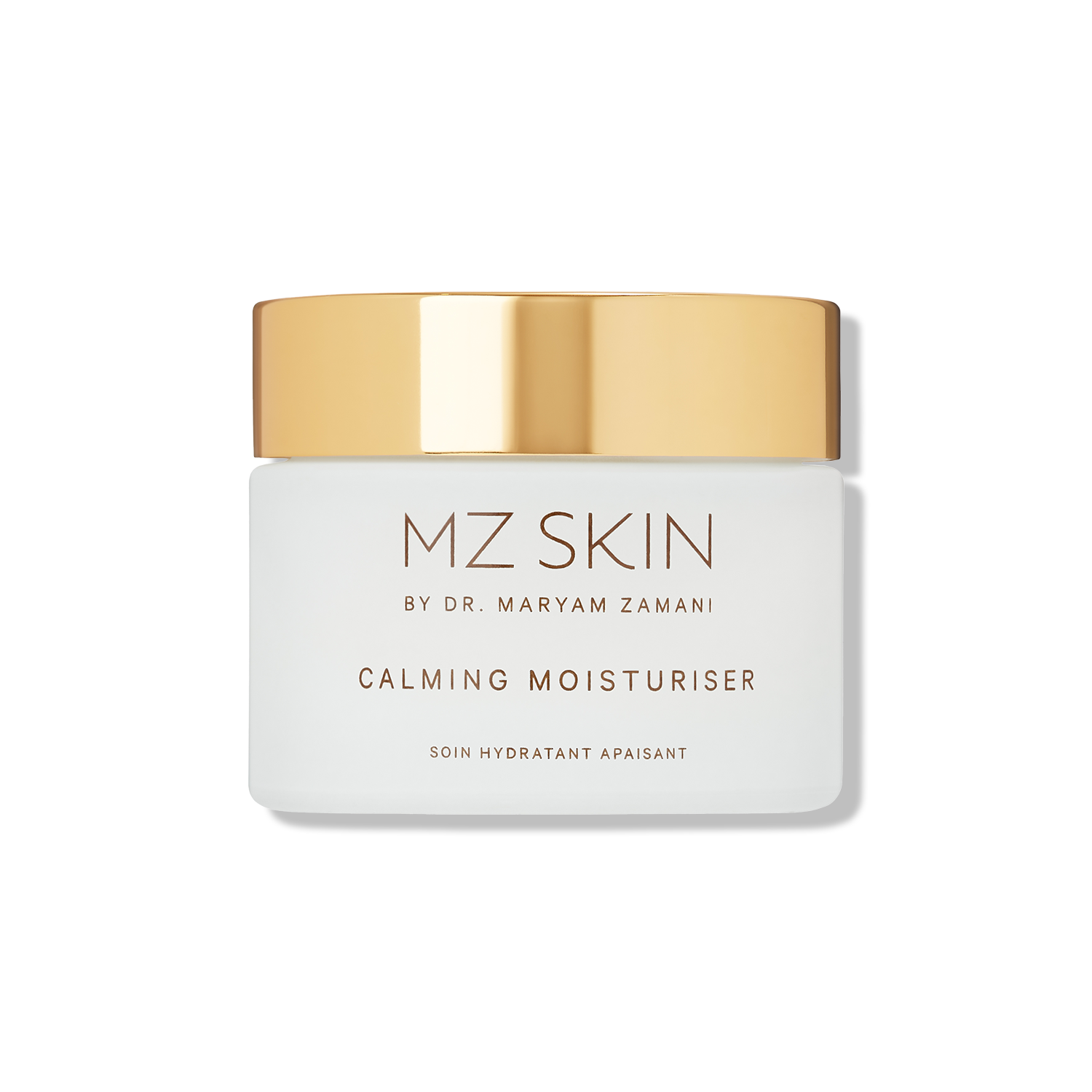
Reactive skin in summer is not a sign that a ritual has failed. It is a predictable response to heat, UV exposure and a barrier working harder than usual to keep moisture in and irritants out. Dr Zamani's approach is to simplify rather than add: Calm the skin first, protect it consistently with SPF, and only reintroduce more targeted actives once the reactivity has settled. Read more about our 3-Step Ritual here, or shop the Calming Collection now.