




Eye Cream: The Complete Guide from an Oculoplastic Surgeon
The skin around the eyes is where tiredness shows first. A late night, a long flight or a stressful week tends to appear there before anywhere else on the face. Over time, it is also where the first fine lines settle.
Dr Maryam Zamani has spent more than two decades treating this area as an oculoplastic surgeon, a doctor who specialises in the eyelids and the structures around the eye. That clinical perspective shapes how MZ SKIN approaches eye care: with a clear view of what an eye cream can achieve, and an honest one about where it stops.
So, do you need an eye cream? For most adults, yes. The eye area is structurally different from the rest of the face, and it benefits from a formula designed for it.
Why the Eye Area Ages First
The skin of the eyelids is the thinnest on the body, often less than a millimetre thick. It has fewer oil glands than the rest of the face, so it dries out more quickly and has less natural protection.
It is also constantly in motion. The muscle that encircles the eye, the orbicularis oculi, contracts every time you blink, squint or smile, thousands of times a day. Repeated movement on thin, dry skin is why expression lines appear here first.
Add sun exposure, rubbing and the gradual loss of collagen and fat with age, and the result is a familiar set of changes: fine lines, crepey texture, shadows, puffiness and, eventually, a loss of firmness in both the lower and upper eyelid.
What Does Eye Cream Actually Do?
A well-formulated eye cream does three things.
First, it hydrates. Humectants such as hyaluronic acid draw water into thin skin, which softens the appearance of fine lines within minutes. Lipids such as ceramides help hold that water in place.
Second, it delivers targeted actives at a strength the eye area can tolerate. Peptides support firmness, caffeine helps reduce fluid-related puffiness and brightening ingredients address shadowing. The same actives in a face serum are often too concentrated for the eyelid.
Third, it is formulated and tested for the area. Eye creams avoid ingredients that commonly sting or migrate into the eye, and the best are ophthalmologically tested. For a closer look at individual actives, read what ingredients reduce dark circles under eyes and the benefits of eye ampoule serums.
Eye Cream vs Moisturiser: Do You Need Both?
This is one of the most common questions about eye care, and the answer depends on what you want the product to do.
A gentle, fragrance-free moisturiser can hydrate the eye area. What it cannot do is treat a specific concern. Face moisturisers are formulated for thicker skin, often contain fragrance or actives at higher concentrations, and tend to be heavier, which can contribute to puffiness or the small white bumps known as milia.
An eye cream is lighter, gentler and built around the concerns that appear in this area. If you want to soften lines, reduce puffiness or brighten shadows, an eye cream is the right tool. Dr Zamani recommends introducing one from your twenties, when collagen production begins to slow.
Choosing an Eye Cream for Your Concern
The most effective eye cream is the one matched to your concern. Start with what bothers you most.
| Concern | What to look for | MZ SKIN option |
|---|---|---|
| Fine lines and crepiness | Peptides, hyaluronic acid, bakuchiol | Intensive Bio-Placenta Eye Cream |
| Loss of firmness, upper and lower lid | Peptides, Bio-Placenta | Intensive Bio-Placenta Eye Cream |
| Puffiness | Caffeine, peptides, cooling application | Depuff & Define Contouring Eye Rescue, Microtox Tightening Eye Serum |
| Dark circles | Brightening actives, hydration | Soothe & Smooth Hyaluronic Brightening Eye Complex |
For fine lines and loss of firmness
Intensive Bio-Placenta Eye Cream. Most eye creams focus on the under-eye. This one is designed for the entire eye contour, upper eyelid included. Powered by Bio-Placenta, peptides and the proprietary M5Rx complex, it is clinically proven to reduce fine lines by 14.3%, improve firmness by 15.2% and enhance upper eyelid smoothness by 41% after one month. A subtle luminescent tint brightens the under-eye on application.
For puffiness
Depuff & Define Contouring Eye Rescue. A high-potency caffeine and peptide complex helps reduce puffiness, while pigmentation-correcting actives soften the look of shadowing. It also helps prevent collagen degradation and loss of elasticity.
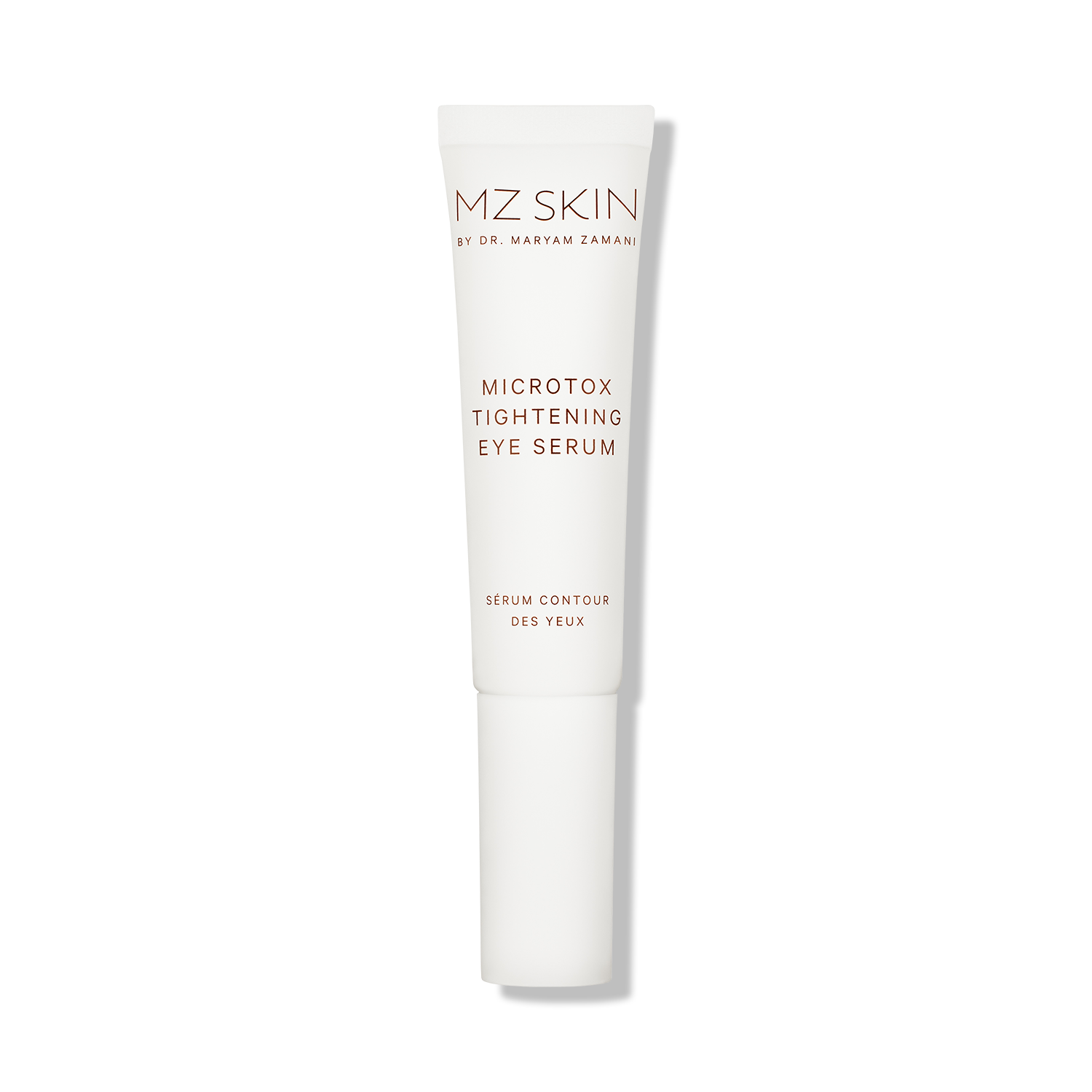
Microtox Tightening Eye Serum. Applied with a cooling metal roller that massages as it absorbs, this fragrance-free serum combines Acetyl Tetrapeptide-5 with a Sichuan pepper-derived ingredient to lift and depuff. In dermatological assessment, the appearance of eye bags improved by 22.7% after one month.
For dark circles
Soothe & Smooth Hyaluronic Brightening Eye Complex. A firming eye cream with a tri-peptide, in which hyaluronic acid and ceramides restore moisture to plump and smooth fine lines. Albizia bark extract helps reduce the appearance of darkness on the lower eyelid. For the story behind it, read our icon in focus: Soothe & Smooth.
Shadows caused by hollowing or volume loss are structural, not a matter of pigment or hydration, and no eye cream can correct them.
How to Apply Eye Cream
Technique matters as much as formula. Use your ring finger, which applies the least pressure. Take a small amount, roughly the size of a grain of rice for both eyes, and tap it gently along the orbital bone from the inner to the outer corner. Avoid dragging the skin.
Keep it away from the lash line. Eye cream travels towards the eye as it warms, so placing it on the bone rather than the edge of the lid reduces the risk of irritation. Intensive Bio-Placenta Eye Cream is also designed for the upper eyelid: apply a small amount beneath the brow.
Dr Zamani recommends applying eye products first, before serum and moisturiser, so that heavier face products do not block them or travel into the eye area. Use them morning and evening.
What Eye Cream Cannot Do
An eye cream works on the skin. Some changes around the eye lie deeper.
Bags caused by fat pushing forward beneath the lower lid, hollows from volume loss and significant drooping of the upper eyelid are structural. They do not respond to topical products, however well formulated. These are the concerns Dr Zamani treats in clinic, with options ranging from injectables to blepharoplasty, or eyelid surgery. For more on the different causes of bags, read under-eye bags: fluid, fat or laxity. To discuss treatment, visit Dr Maryam Zamani's clinic.
Knowing the difference is the most useful thing an eye cream guide can offer. It saves months spent using the wrong product on a problem it was never designed to fix.
An Eye Care Ritual
Every MZ SKIN routine follows three steps: Reveal, Enhance and Protect.
Reveal
The Calming Cream Cleanser. Cleanse without stripping. Keep exfoliating acids and scrubs away from the eyelids, where the skin is too thin to tolerate them. For an intensive weekly treatment, read about the Bio-Placenta Peptide Hydrogel Masks.
Enhance
Microtox Tightening Eye Serum. In the morning, roll it from the inner to the outer corner to depuff and lift.
Intensive Bio-Placenta Eye Cream. Follow morning and evening, tapping it along the orbital bone and beneath the brow. Both go on before your face serum.
Protect
Expert UV Protector SPF50. UV exposure breaks down collagen around the eyes as it does everywhere else. Apply SPF up to the orbital bone each morning, and wear sunglasses with UV protection to reduce squinting.
“The eye area is one of the first places to show signs of ageing, not just under the eyes, but on the upper eyelid as well. Most creams do not address both,” says Dr Maryam Zamani.
Explore the full eye care collection, or read more about Dr Zamani's background as an oculoplastic surgeon.
Everything You Need to Know
Do I really need an eye cream?
Not strictly, but most adults benefit. The eye area is thinner and drier than the rest of the face, and an eye cream delivers targeted actives at a strength it can tolerate.
Can I use my face moisturiser around my eyes?
A gentle, fragrance-free moisturiser can hydrate the area, but it will not target lines, puffiness or dark circles. Richer formulas can also contribute to milia.
When should I start using eye cream?
From your twenties. Collagen production begins to decline in this decade, and consistent hydration and protection pay off over time.
Can eye cream get rid of dark circles?
It can soften dark circles caused by pigmentation, thin skin or fatigue. It cannot correct shadows caused by hollowing or volume loss, which need in-clinic treatment.
Should eye cream go on before or after serum?
Before. Dr Zamani recommends applying eye products first, so heavier face products do not block them or travel into the eye area.
Can I use retinol around my eyes?
Only in a formula designed for the eye area, introduced slowly. Bakuchiol, found in Intensive Bio-Placenta Eye Cream, is a gentler alternative. For more, read understanding eye area ageing and retinol.
In Summary
- The skin around the eyes is the thinnest on the body and shows ageing first.
- Eye cream hydrates, targets specific concerns and is formulated to avoid irritation.
- Choose by concern: fine lines, firmness, puffiness or dark circles.
- Apply with the ring finger along the orbital bone, before serum and moisturiser.
- Structural bags, hollows and drooping lids need in-clinic treatment.
- Daily SPF and sunglasses protect the collagen around the eyes.